An Informative Board Component Cheat Sheet
1. CAPACITORS
Components that can quickly charge and discharge electricity.
This is useful for keeping components on the board alive when the supply of power is irregular. Generally speaking, one side of the capacitor should short to ground, the other should not. Exceptions to this rule usually include capacitors used in single traces for IC chips.
A. Ceramic Capacitors
Benefit of being small in size, downside being that the capacity is likewise small.

B. Electrolytic Capacitors
Bigger size, bigger capacity.
Widely used for decoupling or noise filtering in power supplies and DC link circuits


C. Supercapacitors (aka Ultracapacitor)
High-capacity capacitor, with a capacitance value much higher than solid-state capacitors but with lower voltage limits. It bridges the gap between electrolytic capacitors and rechargeable batteries.


2. FUSES
A fuse is an electrical safety device that protects an electric circuit from excessive electric current. Fuses are destroyed when overloaded. In order to test a fuse, change your multimeter to resistance mode and touch each side with one of the probes. If the multimeter reads 0L, the fuse is dead.


3. INTEGRATED CIRCUIT (IC)
There are seemingly as many types of integrated circuits as there are stars in the night sky. While you’re likely better off finding the specific model of the one you’re troubleshooting, I’ve included some common types and their purposes.
A. SDIP (Plastic through-hole package)
Small footprint, easy to replace, cheap.

B. QFP (Quad flat package)
Usually thinner than SDIP, extremely easy to replace.

C. QFN (Quad flat no-lead package)
Usually the smallest/thinnest IC, more difficult to replace. ICs with exposed legs are easy to test for faults, assuming you can find a pinout for the model, but QFN form factor IC chips can usually only be tested by testing the surrounding components.

D. BGA (Ball grid array)
Generally larger, most commonly used for CPU/RAM/GPU ICs, very difficult and extremely time consuming to replace.

4. RESISTORS
A resistor is a passive component that reduces voltage or limits the current flowing through a circuit. This component can also absorb energy and dissipate this energy in the form of heat.
A. Through-hole resistor
A fixed resistor that has long, pliable leads that can be stuck into a breadboard, or hand- or wave-soldered into a PCB.

B. Surface mount resistor (SMD)
Strictly exist for size purposes. They serve the same purpose as regular resistors, and they can even be replaced with regular through-hole resistors, though there is no real point in doing so.

C. Thermal resistor (Thermistor)
Resistance value decreases or increases when temperature increases.
Generally used to help regulate the heat of the device. The colored bands on both thermistors and through-hole resistors can be used to tell the difference between the two. (See Appendix B)
Notice how that black SMD thermistor looks extremely similar to an SMD fuse? Sometimes you’ll get lucky and the manufacturer will use standard designations. In this case, the fuse would have a white capital F on it, and the thermistor would have an RT (See Appendix A). This varies a lot and they won’t always be labeled. If that’s the situation you’re in, you’ll have to go off of context clues. Like what type of device is it? Is the boardview available for this product? Does the manufacturer have a component list? Etc.

5. TRANSISTORS
Used for making logic gates, switches, amplifiers, the list goes on. Standalone transistors are most common on simple circuits. Most ICs make use of transistors internally, so you won’t see them very often on their own. They’re also usually extremely annoying to replace as most simple PCBs that make use of them are extremely thick boards, causing them to absorb most of the heat when attempting desoldering. (You’ll usually only see standalone transistors in the form of modern MOSFETS, pictured below.)

6. COILS
Current-carrying wire designed to produce a magnetic field or to provide electrical resistance or inductance. Some of these are incredibly easy to replace, like image 4 which is a Nintendo Switch induction coil. It just has two pads and basically acts like a resistor. However some like image 5 and 6, which are Xbox coils, are much harder to replace and can damage the motherboard permanently.


7. DIODES
Diodes have an absurd amount of applications: reverse current protection, logic gates, voltage spike suppression, power rectification, lighting (LED), and etc. Current passing through a diode can only go in one direction, therefore the key function of a diode is to control the direction of current-flow.


8. CRYSTALS (Source)
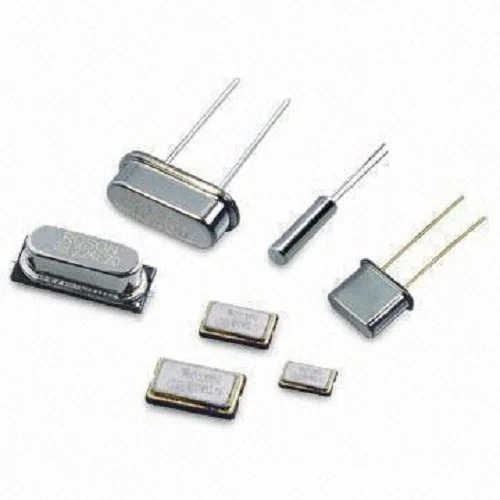
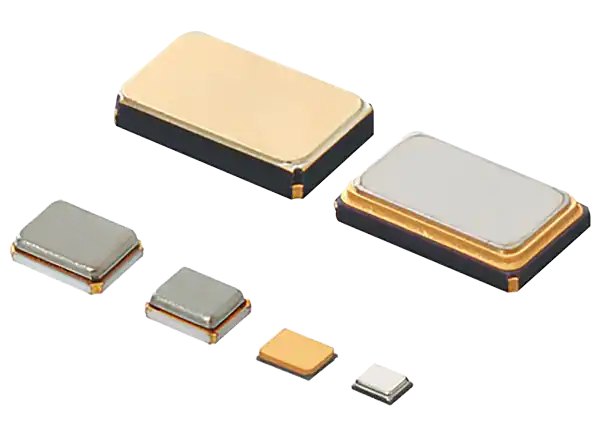
Crystal oscillators are components used to generate precise clock signals in electronic devices. Its working principle is based on the piezoelectric effect of quartz crystals, which can provide very stable frequency output. These come in two main forms, a 4pin SMD component, and a 2pin component. Can only be tested with an oscilliscope.
A. Passive crystal oscillator
A passive crystal oscillator does not contain a built-in oscillation circuit. It is just a quartz crystal that needs to be used in conjunction with an external oscillation circuit. Passive crystals usually have two pins for connecting to the feedback network of the circuit.
B. Active crystal oscillator
The active crystal oscillator (Active Oscillator) has an oscillation circuit built in, usually in the form of an integrated circuit, also known as a crystal oscillator IC. In addition to containing a quartz crystal, it also integrates components such as a crystal driver, a temperature compensation circuit, and a voltage regulator. The clock signal provided by an active crystal oscillator is more stable, accurate, and has lower phase noise.
9. APPENDIX
A. Component reference label guide
B. Resistor color band code guide
C. Repair Wiki
D. RetroSix Wiki, a massive repository of information on console repair.